Between the ages of 14 and 20, I think I read a grand total of five books.
That puts my high school/university self squarely in the majority of Italians—maybe the only time —since the average Italian reads less than one book a year.
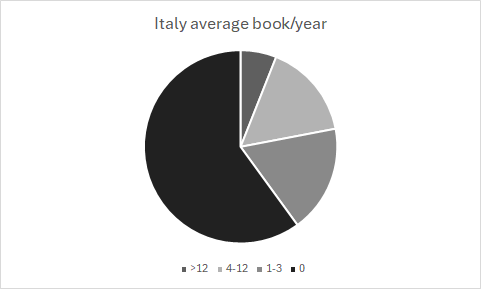
Just to be clear: there’s absolutely nothing wrong with not being a reader, and being one doesn’t automatically add value to your life. The real value comes from what you read and how you extract meaning from it.
During my “porcupine phase” , I was convinced thath they were just a boring time sink for intellectual snobs, tedious tomes eating up hours of my precious Minecraft time. Why spend all that time reading when the YouTube videos I devoured daily could communicate the same ideas in 10 minutes, complete with Raid Shadow Legends ads?
Now, in 2025, somehow, I have a constantly updated reading list, pages of neatly stored Notion notes, and an unparalleled sense of satisfaction that feels almost like some kind of collector’s obsession.
So what happened at the start of this summer that reignited my desire to read deeply?
After some self-reflection, I’ve pinpointed three key reasons:
- Discovering useful reading
- Developing a collector’s mindset
- Training my attention span
Let’s break it down:
Useful Reading
For most of my life, I assumed that if I picked up books about topics I was already passionate about, I’d automatically enjoy them. If I read a book about government-mafia negotiations, surely it would be captivating and enriching, right? Wrong.
Why was I wrong? I think I’ve finally figured it out, and I need a bullet point list for this too:
- 75% of the information I was getting from books could easily be replaced by something more stimulating and dopamine-packed—like a podcast episode I could listen to while gaming. Sure, it wouldn’t be as comprehensive, but it was good enough for me at the time.
- Reading wasn’t something I could share socially. As a teenager, anything that isn’t part of your tribe is something you’re unlikely to engage with. Now, I’m part of an awesome community where reading is a shared activity, making it a tool for connection rather than isolation.
So what do I mean by useful reading, and how does this new approach differ from my old one? The key realization was this: I don’t love reading. I am not a reader!
Because of that, I had to stop expecting to enjoy books just because they covered topics I liked. If reading itself doesn’t bring me joy, nothing I read will. I’ll feel disconnected and disengaged.
As I said before, reading isn’t inherently valuable—it’s just a tool for transmitting information. If you use it the wrong way, not only does it become pointless, but it can also trick you into thinking that the subject you’re reading about is uninteresting or not worth your time.
That’s why I no longer think of myself as a reader—I’m a knowledge junkie.
The key to my transformation as an anti-reader was shifting my mindset: I don’t read—I study.
This paradigm shift was the missing puzzle piece. There’s no point in flipping through pages hoping for some cinematic mental experience that transports me into the world of the Banda della Magliana. Instead, I sit down, open Notion, and take structured notes—who the key players were, how they interacted, and most importantly, what the hell was “Er Camaleonte” Abbruciati doing in Milan to assassinate Rosone???
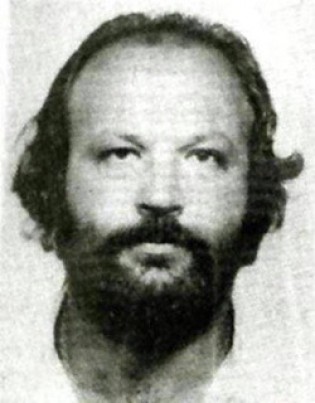
Danilo Abbruciati was one of the leaders of the “Banda della Magliana”, an Italian criminal association. My reading arc begun in 2024, reading “Ragazzi di malavita”, by G.Bianconi.
A knowledge junkie like me eventually realizes that YouTube isn’t where the real information lives—it’s just summaries of summaries, often diluted with opinions and secondhand interpretations. If you really want to understand something, you’ll probably have to open a book and read it. No flashy cuts, no Subway Surfers gameplay in the background: just raw, unfiltered knowledge. That realization gave me the final push: I stopped questioning YouTube’s search bar and started questioning actual sources.
That said, YouTube and social media are still incredibly powerful tools—maybe the best ones we have—for sparking curiosity. They provide endless inspiration: it’s up to us to go deeper.
With this new framework, reading isn’t always fun or enjoyable. Often, it’s not enjoyable. But it’s damn useful. The concepts I read become new neural pathways, expanding my brain in ways that pure entertainment never could. And while I might not get the pleasure of a nice, comfy read, the satisfaction of gaining deep, concrete knowledge more than makes up for it.
And this leads me to my second key point:
The Collector’s Mindset
What feeling do you get at the end of a book? Joy? Do you reflect on the ending? Nothing at all?
Well, guys, I feel the same way as when you finish a big project you started months ago and look at it with pride—I feel amazing. This is linked to two complementary causes:
- Reading a book, in this framework, requires effort. Finishing it makes me feel like an achiever—I set a goal and followed through, despite highs and lows in engagement.
- More than just finishing the book, I’ve created something: my personal notes. These aren’t just summaries—they’re my own mini-book, infused with my thoughts and insights. And few things feel as satisfying as looking at something you built yourself.
In other words, I now see books as trophies on a shelf. And I can’t wait to add another.
Just finished So Good They Can’t Ignore You? Of course, I need my notes on Deep Work next to it, to expand and connect the ideas.
And this works even when the books aren’t directly related. After reading Harari’s Sapiens, I went straight to Forchielli’s Muovete il Culo!, and now I’m diving into The Second Machine Age. The collection keeps growing!
Unlike stamp collecting, though, this collection actually makes me better. It gives me new tools to build relationships, making it not just intellectually rewarding but socially valuable too.
And that brings me to my final point—the foundation of everything, and my ultimate weakness:
Attention span
Before this year—by which I mean 2024—the idea of sitting down and reading for 30 minutes without touching my phone would’ve been unthinkable. Then, thanks in part to a Mr. RIP live stream you should totally check out, I realized just how much this was holding me back. By never allowing space for boredom, I was stifling the very conditions that lead to valuable thoughts and creativity.
My battle with attention is ongoing, but with daily effort and a prayer to the goddess of intentionality, I’m gaining ground. Reading now serves a second purpose: training my attention span and what I call my “attention depth” (if that’s even a thing). It’s about how well I can absorb meaning from a sentence without getting distracted—without having to reread it just because my mind wandered elsewhere.
So here I am: an anti-reader turned knowledge junkie, with a reading list, a Notion database, and an ever-growing collection of ideas. Let’s see where this takes me next.